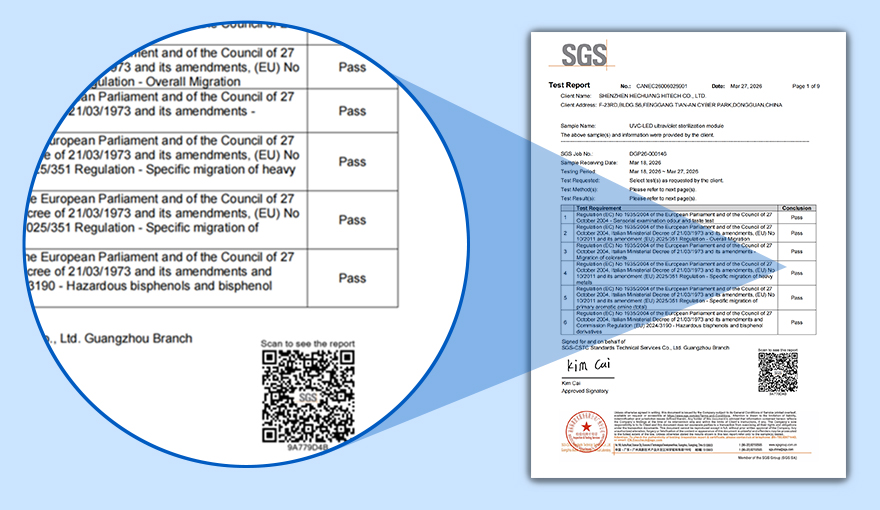

In recent years, water treatment and drinking water safety have increasingly become topics of public discussion. From secondary contamination caused by aging distribution pipelines, to water quality fluctuations driven by extreme weather, and growing concerns about bacterial presence at the point of use, society is asking more questions than ever about the true safety of water.
As technology continues to advance, these concerns invite us to revisit a fundamental yet critical question:
Are today’s water treatment methods truly sufficient to meet current and future water safety challenges?
For many people, water that has passed through centralized treatment is assumed to be safe. However, in real-world conditions, water often travels long distances before reaching the tap. Aging pipelines, biofilm formation, storage tanks, and secondary contamination can all allow microorganisms to reappear at the point of use.
This raises an important question:
Can centralized treatment alone ensure water safety at the “last mile”?
UVC-LED water sterilization technology plays a crucial role at this stage. By integrating UVC sterilization directly into water systems or at the point of use, bacteria and viruses can be rapidly inactivated at the moment water is consumed—providing an additional and reliable layer of protection.
Traditional water treatment has long relied on chemical disinfection. While effective, these methods also present challenges, including the formation of disinfection by-products, changes in water taste, and varying effectiveness against different microorganisms.
This has led many users and professionals to ask:
Is there a way to disinfect water efficiently without introducing chemical risks?
UVC-LED technology offers a physical sterilization approach. By emitting ultraviolet light at specific wavelengths, it disrupts the DNA and RNA of microorganisms, preventing them from reproducing. The process requires no chemical additives, does not alter water composition or taste, and produces no secondary pollution—offering a cleaner and more sustainable solution.
In practical applications, water use is continuous, fast, and often uninterrupted. Whether in residential, commercial, or professional environments, sterilization technology must perform reliably under dynamic flow conditions.
This leads to another key question:
Can effective sterilization be achieved consistently in real-time, flowing water systems?
Innest has focused extensively on UVC-LED water sterilization optimization. Through advanced optical design, precise exposure timing, and system-level integration, our solutions enable rapid and stable sterilization within extremely short contact times—adapting to a wide range of flow rates and application scenarios.
The complexity of modern water safety challenges means there is no single solution. From source control to point-of-use protection, and from centralized treatment to distributed safeguards, water treatment is evolving toward more intelligent and refined systems.
Innest’s UVC-LED water sterilization technology is an integral part of this evolution. By delivering efficient, stable, and controllable sterilization performance across diverse water systems, we aim to support safer water use in residential, commercial, and professional environments.
Raising questions is often the first step toward progress. True value lies in providing clear, reliable, and sustainable answers through technology.
Looking ahead, Innest will continue to advance UVC-LED innovation and expand its applications—contributing to safer, healthier, and more resilient water environments worldwide.
For more information, inquiries or to book an interview please Contact:
Shenzhen Hechuang Hitech CO., LTD.
info@hc-hitech.com
Toll Free +86-769 8208 2301 / +86-769 8208 2380